By Gbenga Sodeinde Ado Ekiti
Hidden within the rocky landscape of Ikere Ekiti lies a stunning natural sanctuary—Ugele Cave—where history is not only preserved but physically etched into stone through distinct spaces believed to have served as ancient “sitting rooms” and inner chambers for survival.
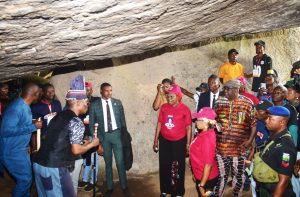
At the heart of this extraordinary formation are two remarkable sections: Yara Igbafe, a spacious relaxation chamber, and Gbagede Binukonu, a more secluded inner room.
Together, they form what many now describe as nature’s own architectural masterpiece—spaces that once provided refuge, shelter, and protection to the ancestors of Ikere people during periods of war and uncertainty.
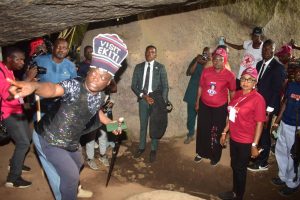
Unlike ordinary caves, Ugele tells a deeper story. Yara Igbafe opens up like a natural parlour—broad, calm, and inviting—where early settlers are believed to have gathered, rested, and held communal interactions.
Its wide rock surfaces and airy structure give the impression of a carefully designed relaxation space, offering both comfort and visibility.
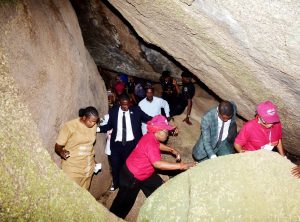
Beyond it lies Gbagede Binukonu, a more concealed inner chamber, naturally shielded and secure. Oral history holds that this inner room served as a protective sanctuary—a place of safety when danger loomed, where families retreated for cover during conflict and unrest.
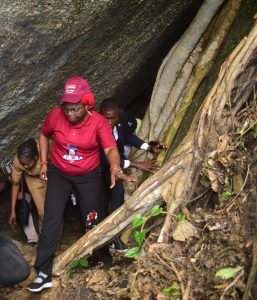
It was within these historic spaces that Ekiti State Governor, Biodun Oyebanji, represented by his Deputy, Chief (Mrs.) Monisade Afuye, led tourists, stakeholders, and community leaders during the Hike Ekiti Mountains 8.0—an effort that further signals the state’s growing ambition to position itself as a global tourism destination.
Standing inside Yara Igbafe and looking toward the inner sanctum of Gbagede Binukonu, the Deputy Governor described the cave as far more than a geological formation.
“What we have here is a complete natural system of living,” she said. “A relaxation space and an inner refuge—these are not random formations; they reflect how our ancestors found safety, comfort, and community within nature itself.”
The cave’s design further reinforces this narrative. Natural openings in the rock allow fresh air to flow through both chambers, maintaining a cool and breathable environment.
The smooth, leveled rock surfaces serve as natural seating and resting areas, while the layered structure creates a clear transition from open communal space to protected inner shelter.
For custodians of the site, these features are central to the cave’s identity. Chief Laurence Awe, the Olotin of Ikere Kingdom, explained that the ancestors who migrated from Ile-Ife recognized these formations as more than coincidence.
“They saw a place prepared for them,” he said. “Yara Igbafe was where life happened—where people sat and interacted—while Gbagede Binukonu was where they found protection in times of danger.”
This rare combination of openness and security is what now sets Ugele Cave apart, making it not just a tourist attraction but a powerful symbol of resilience, survival, and indigenous knowledge.
Tourism authorities believe that highlighting these named spaces and their meanings will elevate the site’s global appeal, offering visitors a story they can physically experience—moving from the “living room” of the past into its hidden sanctuary.
Director General of the Ekiti State Bureau of Tourism Development, Ambassador Wale Ojo-Lanre, noted that such authentic storytelling is key to attracting global attention and positioning Ekiti as a tourism centre to the world.
“Tourists don’t just want to see places—they want to understand them,” he said. “Ugele offers a powerful narrative of refuge, resilience, and life within nature.”
As the state continues to develop the site, emphasis is being placed on preserving these defining features, ensuring that Yara Igbafe and Gbagede Binukonu remain untouched symbols of the cave’s historical significance.
For visitors, the journey through Ugele Cave is more than an adventure—it is a passage through time, from a welcoming natural parlour into a hidden chamber of safety.
In these ancient rooms, carved not by man but by nature, lies a powerful reminder: long before modern shelters, there were places like Ugele—where life was lived, dangers were faced, and refuge was found within the embrace of stone.
With growing attention from government, investors, and cultural enthusiasts, Ugele Cave in Ikere Ekiti is steadily emerging as a defining symbol in Ekiti’s rise as a tourism centre to the world.
Photos: